What Labels Mean

Virtually everything you buy is labelled, from food to clothes to appliances. The labels can cover many things, from country of origin to safety warnings, ingredients, or even energy efficiency. The whole aim is to make you informed about the goods you're buying so you can make a proper, educated, safe decision.
Appliance Labelling
The European Community Energy Label is the one to look for on appliances like dishwashers and washing machines (if you're buying online or by mail order, the retailer must display the label information in a way you can see it). The energy ratings run from A to G (A being the best) Finding a European Ecolabel, is an indication that the item has been extensively tested to meet a number of environmental criteria - a good green buy in this very aware day and age.If there's no label, you should ask the retailer if you can see one; legally, he has to give you that information. If you run into a problem, tell Trading Standards.
Clothing and Footwear
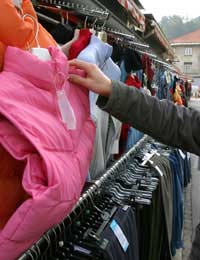
Perhaps surprisingly, clothing doesn't have to show its country of origin. Nor is it necessary to have labels giving washing instructions. What labels on items sold in the E.U. must show is fibre content, which you'll see not only on clothes and bedding, but on all products which are at least 80% made of textiles; that can cover anything from furniture to floor coverings. The label must show the percentage of different materials used, such as 100% cotton.Footwear must also be labelled. The manufacturer has to list the materials that make up at least 80% of the upper and the outer sole (if there's no single item, they must show the main two).
Food Labels
There are stringent E.U. rules for food labelling. Among other things, the manufacturer understandably has to show a list of ingredients, tell you how to store the item, and give the sell-by date.With a number of items, such as burgers, bread and chocolate, there are very specific rules regarding the food. If something contains genetically modified organisms, called GMOs (or ingredients that contain them), the label must show that.
European Marketing Standards, some of which have come under fire around the E.U., contain strict definitions about what are fresh vegetables and fruits, along with a number of other foods. One of the most contentious issues covers "food of designated geographic description or origin," which is why you'll see "Somerset Brie" in the supermarket, for example.
Within the U.K., a manufacturer doesn't have to show nutritional information on the label; it's at their discretion (the exception is if they make a specific nutritional claim).
Homeopathic and Medicine Labels
There's now a National Rules Scheme for all homeopathic medicines. This means the medicines can now say what things they treat.When you buy an over the counter medicine, it should tell you what it's for ("chesty coughs," for example), as well as include a leaflet advising on usage, dosage, and what ages should use it. Prescription medicines also have to show dosages on the label, and the patient information leaflet with it should warn of all known side-effects.
- A Guide to the Consumer Rights Act 2015
- The Consumer Contracts Regulations: Know Your Rights
- Budget Supermarkets: Wise Move or a False Economy?
- How Will the VAT Price Hikes Affect You?
- What to Do With Those Unwanted Gifts!
- Food Labelling Explained
- What's the Law on Clothes Labelling?
- Avoiding Counterfeit Goods at Christmas
- Christmas Sale: Don't Get Ripped Off at Christmas!
- When Am I Not Entitled to a Refund?
- Can Multipack Items Be Separated?
- Consumer Rights and Store Cards
- What To Expect From The Food You Buy
- What You Need to Know About Hire Purchase
- Buying by Mail Order
- Buying on Credit: Your Rights
- Faulty Goods
- How to Complain
- Using the Small Claims Court
- Your Recourse Over Counterfeit Goods
- Your Rights in Internet Auctions
- What Guarantees Mean
- Shopping Online: Your Rights
- Your Rights When Buying Goods Abroad
- Buying by Telephone or E-mail

Re: Dealing With Cowboy Builders
@ Mike W: That's incredibly frustrating and unfortunately more common than it should be. You've been very patient, but three weeks…
Re: Dealing With Cowboy Builders
Had our kitchen remodelled, probably 90% done with just floor and trim/plinths etc left do (probably 2/3 days work max) Builder…
Re: Dealing With Cowboy Builders
I had a young man call yesterday (Sunday) saying he was working with the builders working on a roof down the street. He said he…
Re: Booking a Holiday - What if it Goes Wrong
We booked through travel agents for a Jet 2 holiday in September on the Costa Brava. It was advertised as a 4…
Re: Buying a New Car: Your Rights
I agreed to purchase a new car from a Toyota dealer in September with a delivery date in December, today, November 11 I have been…
Re: Dealing With Cowboy Builders
I had a job to do on my house roof to clean the solar panels and guttering etc. to which I went through 'my job qoute ' and chose…
Re: What Are my Rights on a Faulty Television?
My daughter got a TV from her dad and his partner. The TV is less than a year old and the today we removed the…
Re: Dealing With Cowboy Builders
a builder started our kitchen extension started on 4/12/2023, to date the job has not been finished 21/08/2024 and what work that…
Re: What Are my Rights on a Faulty Television?
I got a samsung oled tv just over 2 months ago, i carfully installed the tv and its been on the av stand not…
Re: Car Hire Refund?
I rented a car online to collect at Sardinia Airport, the rental was made on the day I was due to fly (approx 10 hours before collection) however…