Service Charge
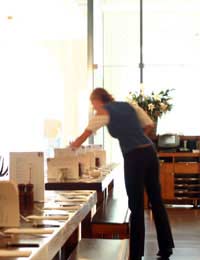
It's not uncommon to receive the bill for your meal and find a service charge, generally in the region of 10%, (although often more) has been added. It's something you can complain about if the meal or the services has been bad. The menu will generally alert you to the size of the service charge.
Unless you have a problem, however, the service charge is mandatory. But does it replace a tip? There's no definite answer - both yes and no are right. If the service has been excellent, then leaving a tip is an acknowledgement of that. If not, then pay the service charge and leave.
Tipping
Waiters and waitresses aren't paid much in the way of salary. What they hope is that they'll make money in tips. It's more than a gratuity, it's a way of paying them for a job done well.
The best rule of thumb for a waiter who does a good job is simply give 10% of your total bill as a tip, rounding to the nearest pound.
You should not penalize your waiter if your steak isn't cooked properly, if the restaurant doesn't have the dish you order, if the bathrooms aren't clean, if you had a problem parking, if you've had a bad day, if a family has loud children in the restaurant, or for any reason outside their control.
Remember, waiters rely on your tips to make a living. They should never be punished monetarily for something they can't control. However, if the service is not up to standard, then you can either neglect to leave a tip or leave a lesser amount.
Other Tipping Situations
Faulty Goods Rights Checker
Find out your legal rights on a faulty product in less than a minute.
Try our Faulty Goods Rights Checker free, here on this site →If you use a taxi, it's commonly accepted practice to add 10% to the fare as a tip. That's the minimum. If the driver has been especially helpful, give more; he's earned it.
When a member of hotel staff gives you particularly good serive, you mught like to give them a small tip of £1-2. For example, a tip is appropriate if a hotel porter takes your luggage up to your room when you arrive, if the concierge helps you (for example, by helping you to buy tickets, book a restaurant or plan your shopping or sightseeing, or by keeping your bags safe even if it is before check-in or after check-out) or if the doorman gets a taxi for you. Don't show the money when you're giving it - put it in your hand, say thank you, shake the person's hand and press the money into the person's hand.
When you use a hairdresser, it's common courtesy to leave a tip of £1-2 for service. If you use an expensive salon, this should be higher.
It is not usual to leave a tip for drinks in a pub or bar, although telling the barperson to "keep the change" or offering to buy them a drink is common practice and they may then take the money for the value of a drink. Where a pub is also a restaurant the serving staff may be tipped. It's less usual to tip in cafes and coffee shops than in restaurants, but it is by no means unheard of.



Your email won't be published. Comments are moderated before appearing.